

Go behind the scenes with two of our incredible research partners, Reyd and Patrick, as they work to protect the Arctic habitats that amazing animals like walruses and beluga whales depend on to survive. Discover what a day in the life of an Arctic researcher is really like and how their work is helping protect these unique ecosystems for the future!
Reyd, Walrus Project
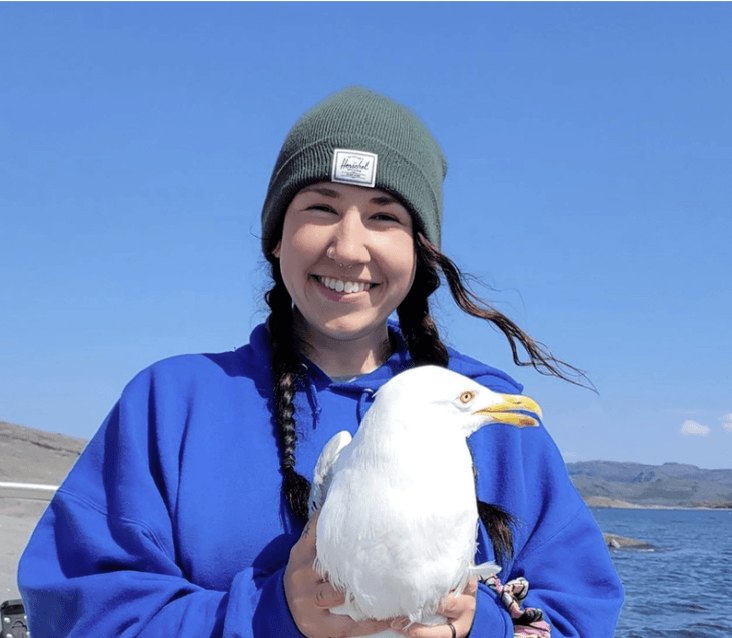
Welcome, Earth Rangers! Some workdays start at a desk, but ours start on a boat!
We head out on the ocean to look for black guillemots, which are black and white seabirds with bright red feet, a sparkling voice, and lots of personality! The boat rides are one of the best parts of the day. Even though we’re working in the Arctic and the air can be chilly, the sun often feels warm on our faces, and the views of the water, cliffs, and wildlife make every trip feel special.
When we reach the breeding colony to look for guillemot nesting spots, things get a little acrobatic! Guillemots like to nest deep in rocky cracks, which means we have to stretch and bend like we’re doing yoga just to reach them!
Up close, these diving birds are soooooo adorable. Their bright red feet look like they’re wearing tiny red shoes, and even though they try to give us a small bite to say, “Hey lady, put me down!”, it doesn’t hurt at all! After checking to make sure they’re healthy, we gently put a small tracker around their leg, just like a robotic anklet. This tracker helps us learn where they will travel across Atlantic Canada over the next few years.
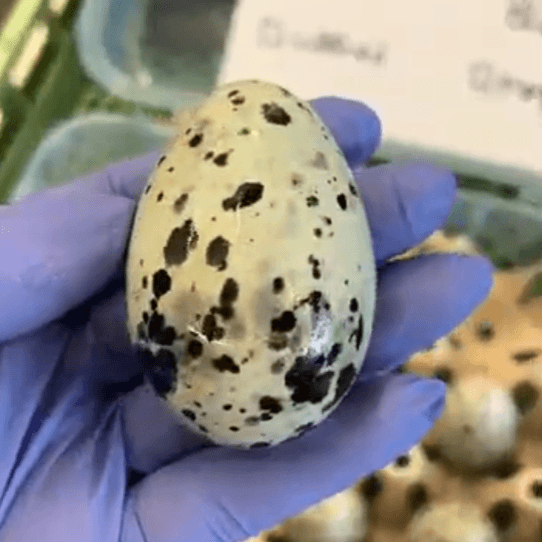
Sometimes, we also collect a single egg from a nest to help us learn more about the birds’ environment and their health. By studying these eggs, scientists can check for oil contaminants and other pollutants. This helps us understand whether the birds are healthy and whether the eggs are safe for people and other animals to eat, which is really important for Northern communities that rely on seabirds as part of their traditional foods.
Of course, no field day is complete without a snack break. Somewhere between nest checks and data notes we pause to refuel with a tasty treat (fish fry anyone?), soaking in the beautiful scenery, watching for whales, and warming up in the sunshine before heading back to look for our feathery friends.
The most rewarding part comes last: letting the birds go. Watching a guillemot flap away from our hands and fly back toward the ocean never gets old. We cheer them on with big smiles on our faces as they disappear into the distance, knowing we’ll be back next year to meet the same birds again.

Patrick, Beluga Whale Project
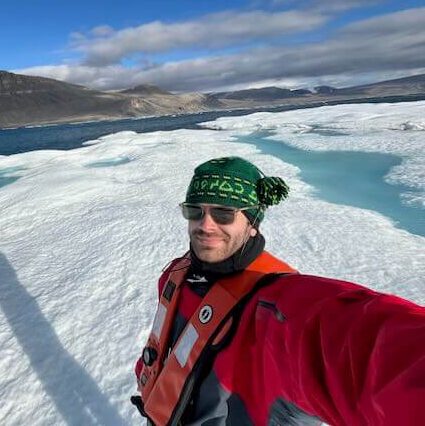
Hi Earth Rangers! It’s Patrick here, and I’m taking you behind the scenes for a typical day in the Arctic. Since we sample the ocean to study how climate change is affecting tiny ocean plants called phytoplankton and the animals (like beluga whales) that depend on them, our work depends on good weather. If the sea is calm, it’s time to get moving!
I always start my day by heading to the field lab to check on our experiments. We’ve turned ordinary fridges and freezers into phytoplankton incubators, controlling temperature and light to study these tiny ocean plants. Once we make sure the experiments are running smoothly, it’s back to base to prepare our sampling gear!
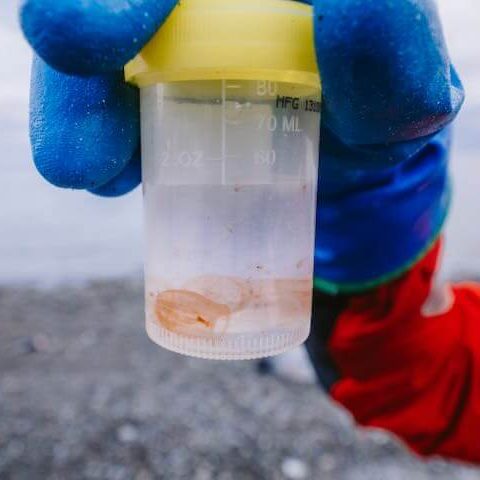
When the weather is right, we head out on the water with our partners from Grise Fiord. Our trips can last anywhere from 4 to 12 hours as we collect samples of phytoplankton all over the northern side of Jones Sound. Along the way, it’s not unusual to spot seals, narwhal, walruses, beluga whales, and even polar bears. It feels a bit like a nature cruise!
To collect samples, we use large bottles attached to ropes, lowering them hundreds of meters into the ocean and pulling them back up by hand. Each bottle captures a snapshot of the ocean at a specific depth, which we bring back to the lab for analysis.
Every day in the Arctic is a mix of science, wildlife sightings, and teamwork, and every sample brings us closer to understanding and protecting the ocean and the beluga whales that call it home.

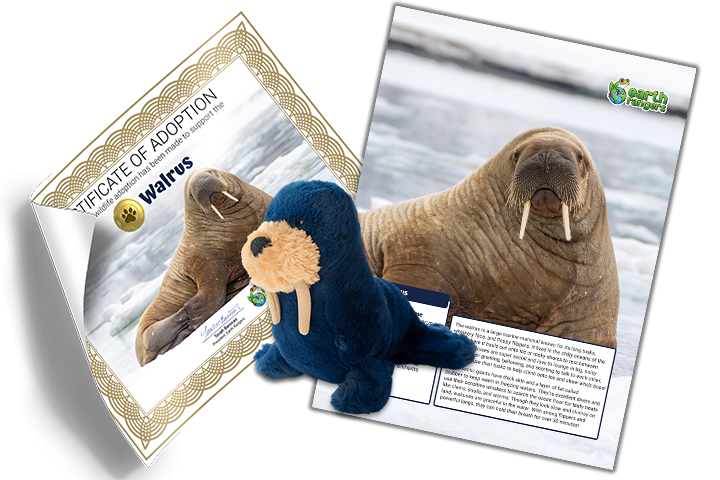
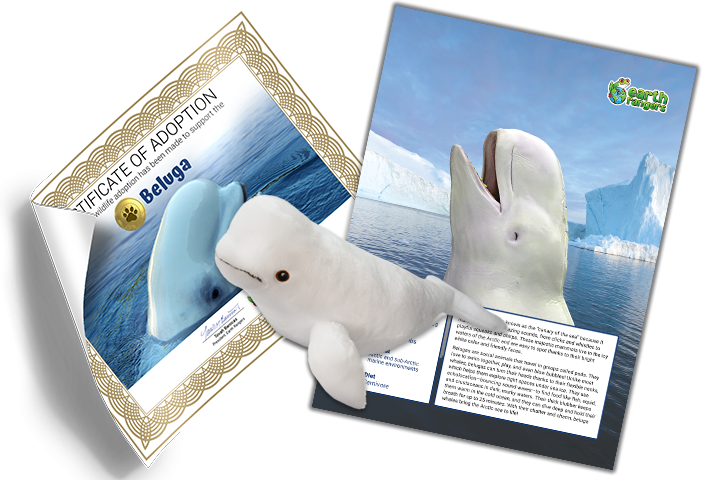
Want to help protect amazing Arctic animals like the walrus and beluga whale? Head to the Adoptions section in the App or visit the Earth Rangers EStore to get your own Adoption Kits and help support conservation efforts for these awesome animals!
You are so kind
I really like Earth Rangers and now I’m an official one.